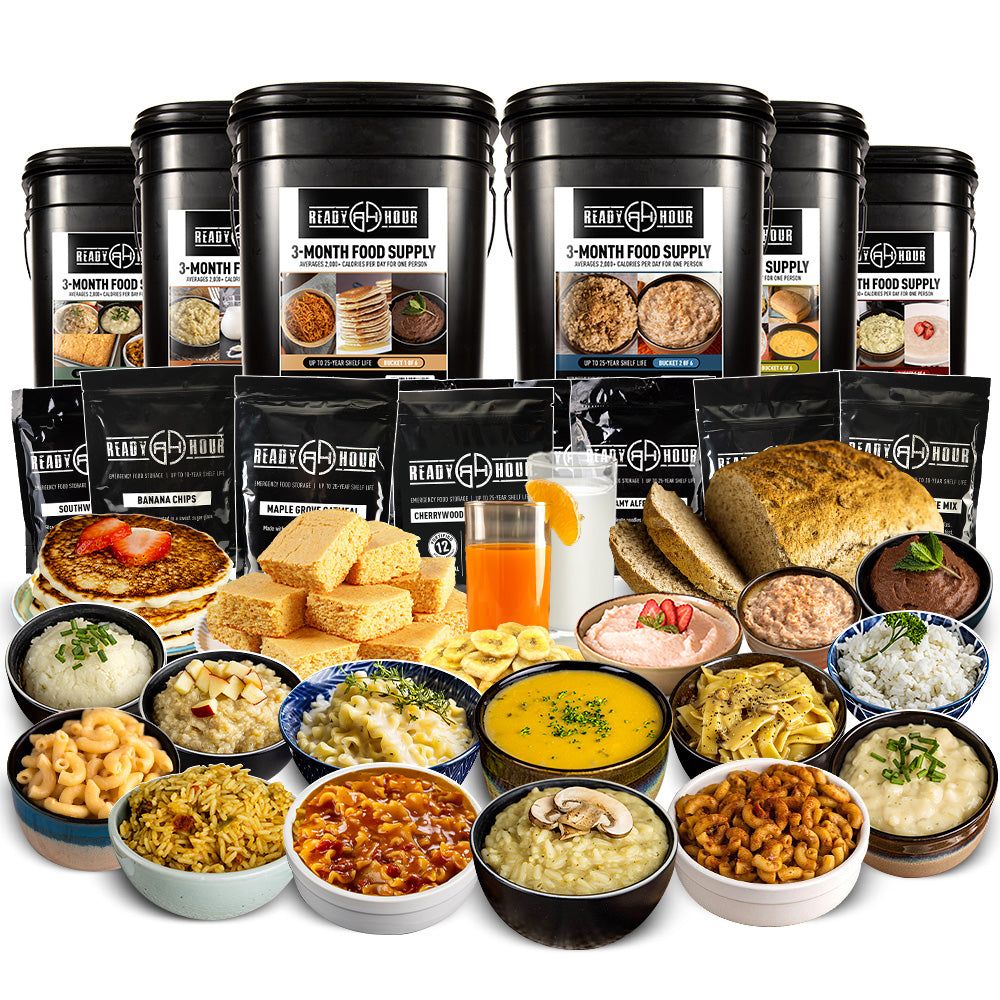
Yes, the Ready Hour Food 3-Month Emergency Food Supply (2,000+ calories/day) is worth $797.95 if you want a set-and-forget food base that feeds one person for 90 days without you doing any calorie math.
Two reasons tip it over the line. First, the manufacturer guarantees 2,000+ calories per day for one person for 90 days, so the hardest part of emergency kit food planning (figuring out whether you actually have enough) is already done. Second, the food ships in sealed buckets built for long-term storage, which means no rotation chores and no discovering an expired stash a year from now.
The price breaks down like this: $797.95 (checked September 11, 2026) for 90 days of counted calories works out to about $8.87 per day, or roughly $266 per month, for one person's full food base. Compare that with what you'd spend restocking groceries you may never rotate.
See the 3-Month Emergency Food Supply Offer
That click opens the official product page on the manufacturer's site: current price, package options, and checkout.
We may earn a commission if you buy through links on this page, at no extra cost to you.
Why the right buyer should care now
Most people putting together emergency kit food run into the same three walls. You guess at calorie counts and hope you bought enough. You spend money on the wrong kit, one that looks impressive but feeds you 600 calories a day when a crisis hits. Then, months later, you find food in the back of the closet that expired before you ever got around to rotating it.
Every one of those failures costs real money and produces a false sense of readiness. The worst outcome isn't a lack of food; it's believing you have three months of food when you actually have three weeks.
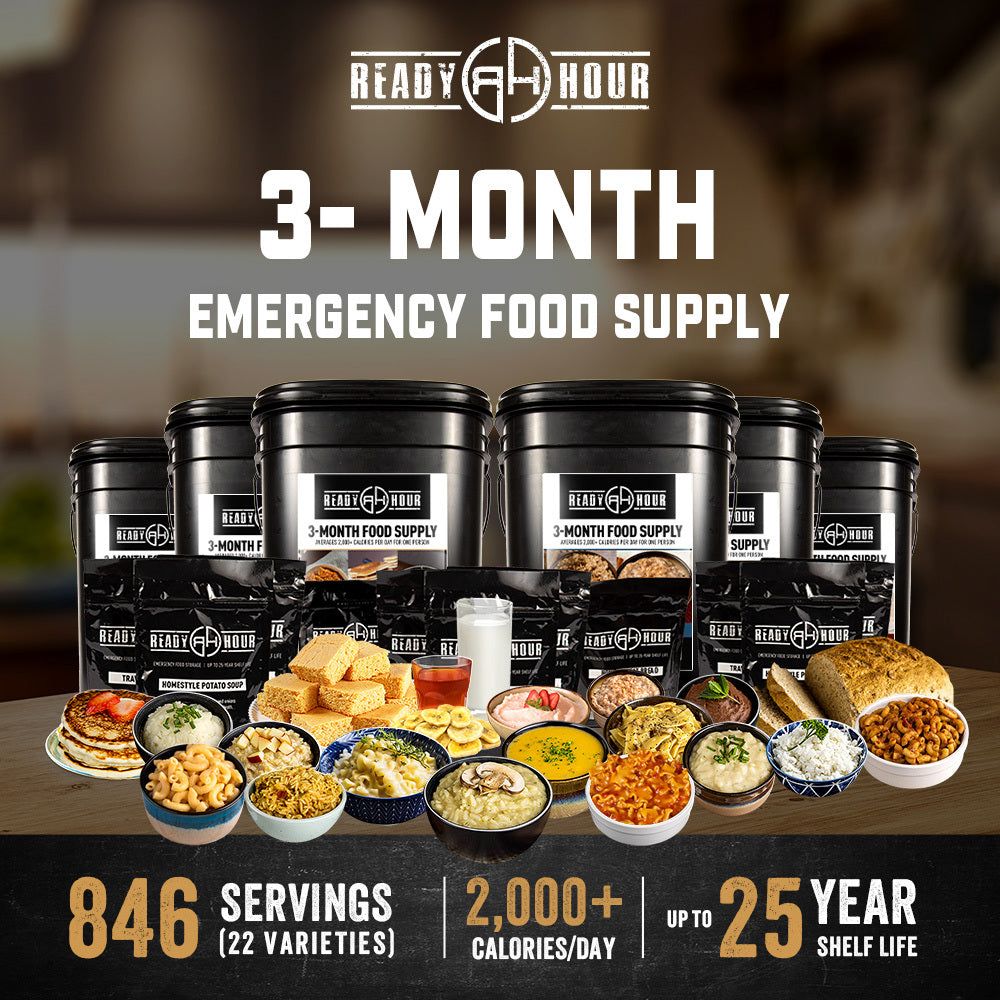
The 3-Month Emergency Food Supply attacks all three problems at once: the calorie math is pre-solved, the storage life is measured in years, and one purchase replaces a rotation calendar. That is why buyers comparing emergency kit food keep landing on it: it deletes the three most expensive ways to get this wrong.
Offer snapshot
Here's what the manufacturer's official product page says about the offer, so you can match it against what you see at checkout:
| Product name | 3-Month Emergency Food Supply (2,000+ calories/day) |
|---|---|
| Brand | Ready Hour Food |
| Format | Sealed emergency food buckets |
| Calories | 2,000+ per day for one person, 90 days |
| Price | $797.95 (checked September 11, 2026). The official page always shows the current price. |
| Availability | In Stock (checked September 11, 2026) |
Bottom line: this is a single purchase that covers one person's calorie base for a full three months, shipped in sealed buckets straight from the manufacturer.
What 2,000+ calories a day actually buys you
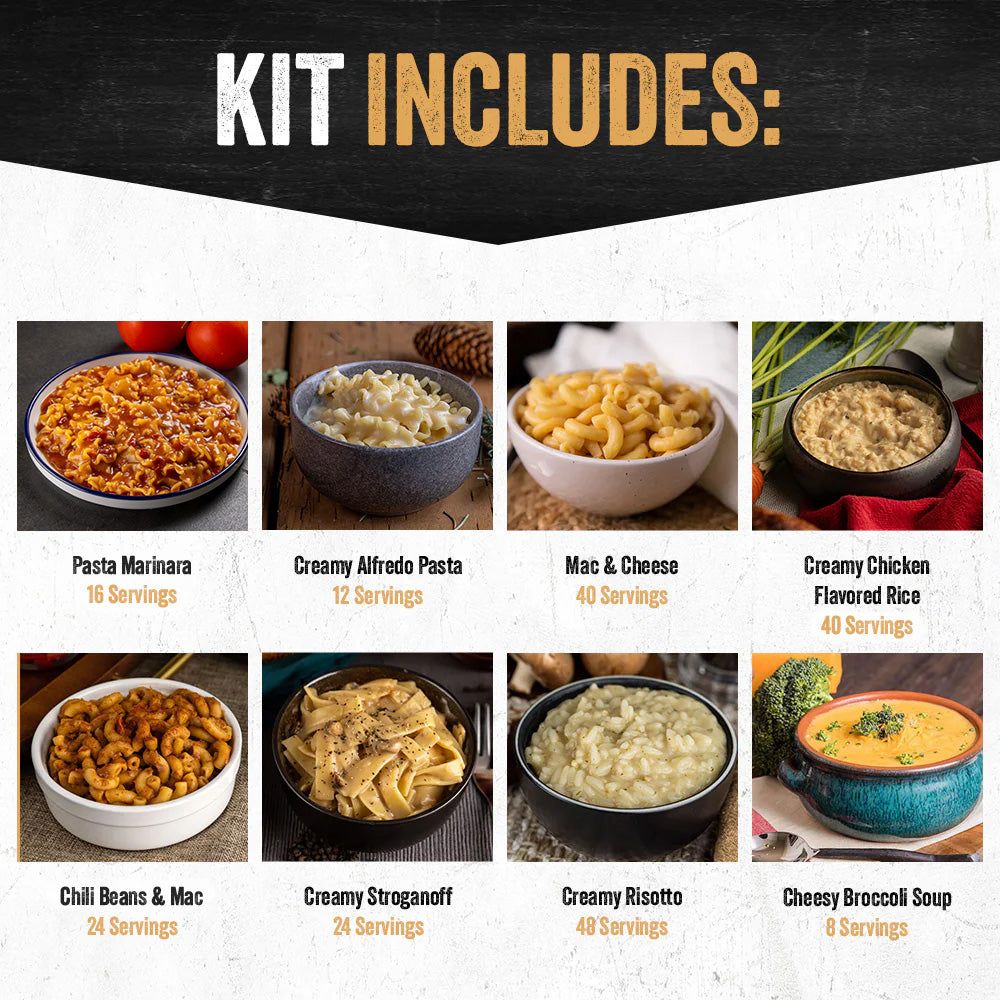
The reason this kit exists is to remove the arithmetic from emergency kit food. Ready Hour describes the supply as a pre-portioned daily calorie target: 2,000+ calories per day for one person, for 90 days. You don't count servings or cross-check nutrition labels; the bucket quantities are arranged so the math adds up to a full daily diet.
The menu is built for repetition without burnout. Ready Hour describes a mix of hearty entrées, breakfasts, and drinks, so each day covers all three without you improvising a meal plan.
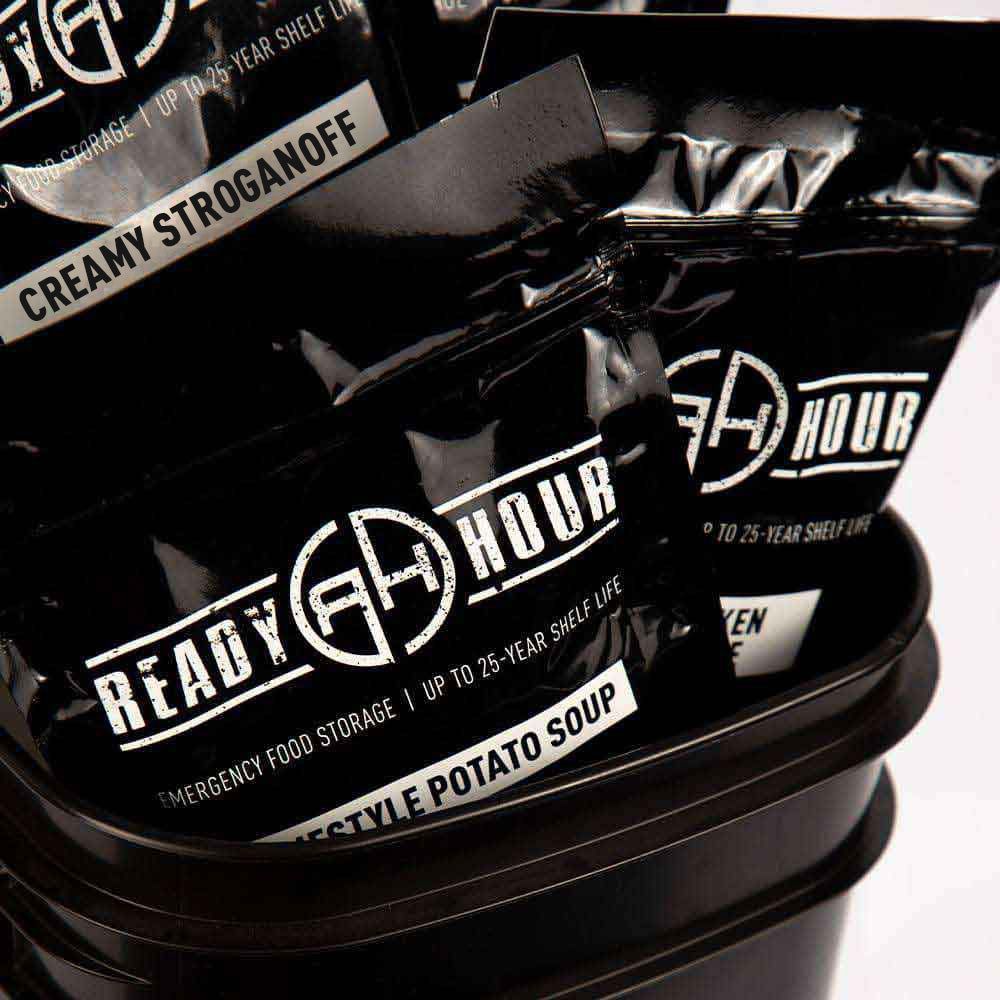
Packaging does the preservation work. The food comes in sealed buckets that protect against light, moisture, and pests, the three things that quietly ruin stored groceries. Ready Hour describes preparation as simple just-add-water cooking, which matters in an emergency when kitchens and equipment are limited.
For the buyer, that mechanism is the whole value: open a bucket, add water, and you're eating a real meal that was counted toward your 90-day supply before it ever left the warehouse.
That is what separates this kit from a shelf of good intentions. If you want the version where the counting is already done, see what's in the 3-Month Emergency Food Supply.
How it compares with the alternatives
There are three realistic ways to build a three-month food reserve. Here's how they stack up against each other honestly:
| Criterion | 3-Month Emergency Food Supply | DIY grocery stockpile | 72-hour kit only |
|---|---|---|---|
| Calories/day coverage | 2,000+ per day, one person, 90 days, pre-calculated | Whatever you bought; calorie math is entirely on you | Short burst only, typically days, not months |
| Shelf-life planning | Sealed buckets built for long-term storage | Varies can by can; you track dates yourself | Snack-grade food with short dates |
| Rotation burden | None; store it and forget it | Constant: eat, replace, and re-check dates on rotation | Small but easy to forget |
| Upfront cost | $797.95 in one purchase (checked September 11, 2026) | Lower per item, but spreads out and adds up | Lowest, but covers the least |
| Best for | A set-and-forget calorie base for one person | Shoppers who enjoy tracking inventory and dates | Immediate evacuation scenarios, nothing longer |
The buyer takeaway: if your goal is a genuine three-month food base with zero ongoing admin, the sealed bucket kit is the only option here that delivers it in one decision. A DIY stockpile can work if you commit to the maintenance, and a 72-hour kit is a useful complement, but neither replaces 90 days of counted calories.
What about the advice floating around reddit.com and the preparedness threads? Those discussions are useful for vocabulary and horror stories, but they are anecdote, not specification: no thread can tell you whether your stash adds up to 2,000 calories a day. That is the gap a pre-calculated kit closes. Instead of decoding opinions into a shopping list, you start from a manufacturer-specified number, 2,000+ calories per day for one person for 90 days, and verify it on the official product page.
Beginners get the same benefit in a simpler form. If you are new to emergency kit food, ignore the brand debates and check two numbers first: guaranteed daily calories and shelf life. This kit puts both in writing (2,000+ calories/day for 90 days, sealed buckets for long-term storage, per the manufacturer), which is why it keeps working as a first purchase rather than a first mistake.
Who gets the most value from it
- You want a set-and-forget base layer. One purchase covers three months of calories, and the sealed buckets sit quietly until needed.
- You have a cool, dry storage spot. A closet, basement corner, or garage shelf keeps the buckets in their long-term storage conditions.
- You won't maintain a rotation calendar. If "first in, first out" grocery juggling isn't happening in your house, sealed buckets remove the failure mode.
- You live in a tiny apartment with no storage. The buckets need real space, and cramming them somewhere damp or hot undermines the packaging.
- You want your normal fresh diet in a crisis. This is a calorie base of packaged meals, not a substitute for your regular grocery routine.
- You need immediate short-term groceries. If the gap you're covering is this week's food, a grocery run serves you faster than a long-term kit.
Read that list honestly: if two or more of the "yes" entries describe you, this kit is built for your exact situation. If the "no" entries dominate, your money is better spent elsewhere for now. And if the "yes" column wins, the fastest way to act on that is to check the official 3-Month Emergency Food Supply offer.
The strongest reasons to choose it - and the tradeoffs
Strengths
- Calorie math is done for you: 2,000+ calories per day for one person, 90 days, per the manufacturer.
- Sealed bucket packaging is designed for long-term storage without rotation chores, according to the manufacturer.
- Simple just-add-water preparation with minimal equipment.
- One purchase covers a full 90 days instead of dozens of separate buying decisions.
Tradeoffs
- $797.95 is a real upfront commitment (checked September 11, 2026).
- Packaged menus mean less variety than your normal food over three months.
- The buckets need cool, dry storage space you have to provide.
- You still need water on hand, since preparation is just-add-water.
Bottom line: buy it if you want a three-month calorie base handled in one decision and you have the storage space for buckets. Skip it if you can't commit the $797.95 or you have nowhere cool and dry to keep it. If that bottom line reads like your situation, see the 3-Month Emergency Food Supply offer.
Questions to settle before you buy
Before you buy, know three things. The $797.95 price was checked September 11, 2026, and the official page always shows the current number. Preparation is just-add-water, so your water plan matters as much as your food plan. And the buckets need cool, dry storage space you provide. If those three check out on your end, the answers below cover the rest.
It's worth it when your priority is a pre-solved three-month calorie base with zero rotation work, and the $797.95 one-time cost (checked September 11, 2026) fits your budget. If you'd rather spread spending out and enjoy tracking dates and inventory yourself, a DIY stockpile serves you better; the kit wins on certainty, not on being the cheapest route.
Final verdict
If you're one of the buyers this kit is built for, the Ready Hour Food 3-Month Emergency Food Supply (2,000+ calories/day) is a confident yes at $797.95 (checked September 11, 2026). You walk away knowing your food base for one person is handled for a full three months: the calorie math is guaranteed by the manufacturer, the kit was in stock at the time of checking, and the sealed buckets mean you can store it and stop thinking about it.
The wrong-fit buyer is the person with nowhere cool and dry to store buckets or no room in the budget for a one-time purchase of this size. For everyone else, this is the single decision that closes the three-month food gap.
See the 3-Month Emergency Food Supply Offer
You'll land on the manufacturer's official page for the 3-Month Emergency Food Supply (2,000+ calories/day), where the current price, package details, and checkout are one scroll apart.